

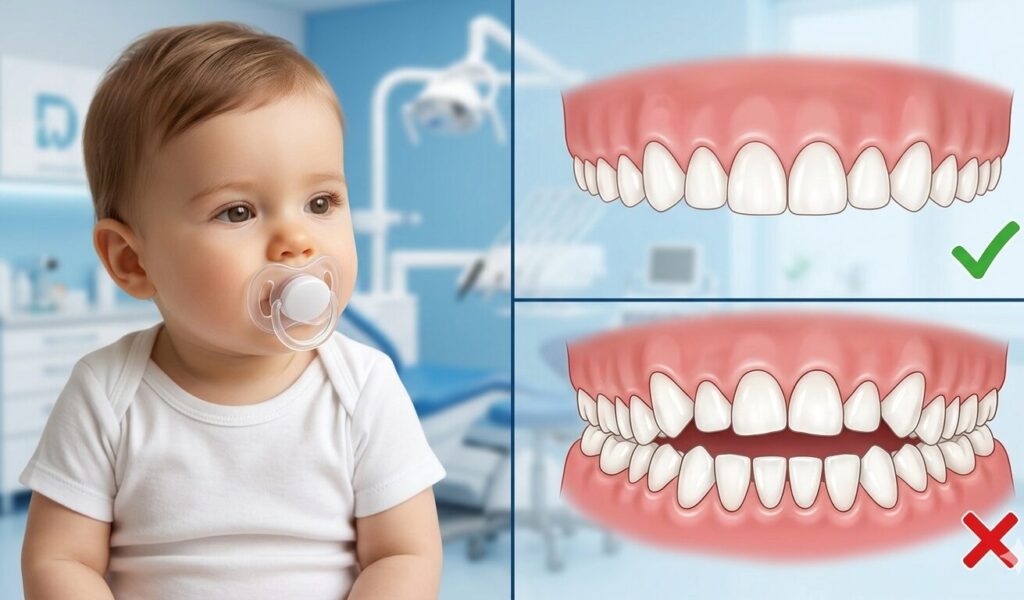
Are pacifiers safe for babies teeth? This is one of the most common concerns among parents. Pacifiers are widely used to soothe babies, help them sleep, and reduce fussiness. However, many parents worry about their long-term impact on oral health.
While pacifiers are generally safe during early infancy, prolonged use can lead to dental issues. Therefore, understanding the pacifier effects on teeth, knowing when to stop pacifier, and comparing pacifier vs thumb sucking teeth is essential. At Ivory Dental World, dentists guide parents on safe usage to protect their child’s smile.
Are Pacifiers Safe for Babies Teeth in Early Age?
In the first year of life, pacifiers are usually safe when used properly. Babies have soft, developing gums, and occasional pacifier use does not harm their teeth.
In fact, pacifiers may:
- Help soothe babies
- Support sleep routines
- Provide comfort during stress
However, constant or prolonged use can start affecting oral development. Dentists at Ivory Dental World recommend using pacifiers only when necessary rather than as a continuous habit.
Pacifier Effects on Teeth You Should Know
Understanding the pacifier effects on teeth helps parents make informed decisions.
1. Misaligned Teeth
Prolonged sucking pressure can push teeth forward, leading to alignment issues.
2. Open Bite Problem
The upper and lower teeth may not meet properly, affecting chewing and speech.
3. Narrow Jaw Development
Continuous use may impact jaw growth, leading to long-term dental concerns.
4. Speech Development Issues
Improper tooth positioning can sometimes affect how a child speaks.
Early dental evaluation at Ivory Dental World can help prevent these complications.
Table: Pacifier Use vs Dental Impact
| Pacifier Habit | Impact on Teeth | Risk Level |
|---|---|---|
| Occasional use (0–1 year) | Safe | Low |
| Limited use (1–2 years) | Minor effects | Moderate |
| Frequent use (2+ years) | Misalignment risk | High |
| Constant use | Jaw development issues | High |
Pacifier vs Thumb Sucking Teeth – Which Is Worse?
Parents often compare pacifier vs thumb sucking teeth to understand which habit is safer.
| Habit | Control | Dental Impact |
|---|---|---|
| Pacifier | Easier to control | Less harmful if stopped early |
| Thumb sucking | Hard to stop | Higher long-term risk |
Therefore, dentists generally recommend pacifiers over thumb sucking because they can be gradually reduced and controlled.
At Ivory Dental World, parents receive guidance on managing both habits effectively.
When to Stop Pacifier to Protect Teeth
Knowing when to stop pacifier use is crucial for preventing dental problems.
Recommended Timeline:
- 0–12 months: Safe usage
- 12–24 months: Gradual reduction
- After 2–3 years: Stop completely
The earlier you stop, the lower the risk of dental issues.
Tips for Safe Pacifier Use
To minimize risks:
- Use pacifiers only when needed
- Avoid prolonged daily use
- Choose orthodontic pacifiers
- Keep them clean and hygienic
- Never dip them in sugar or honey
For personalized advice, visit Ivory Dental World
How to Prevent Dental Problems in Babies
Preventive care plays a key role in maintaining oral health.
- Clean your baby’s gums regularly
- Start brushing once teeth appear
- Encourage healthy habits early
- Schedule regular dental visits
Preventive care at Ivory Dental World ensures proper dental development.
When Should You See a Dentist?
Visit a dentist if:
- Your child uses a pacifier beyond age 3
- Teeth appear crooked or misaligned
- Bite issues are noticeable
Early diagnosis at Ivory Dental World can prevent long-term complications.
Final Thoughts
So, are pacifiers safe for babies teeth? The answer is yes, but only when used correctly and for a limited time.
Pacifiers can be beneficial during infancy, however, prolonged use may lead to dental issues such as misalignment and bite problems. Therefore, parents should monitor usage and know when to stop pacifier habits early.
For expert advice and child-friendly dental care, trust Ivory Dental World, where your child’s healthy smile is the priority.
FAQs
1. Are pacifiers safe for babies teeth?
Yes, they are safe during early infancy when used occasionally.
2. What are the pacifier effects on teeth?
Prolonged use can cause misaligned teeth and bite problems.
3. When should I stop pacifier use?
Ideally between 2–3 years of age.
4. Is pacifier vs thumb sucking teeth comparison important?
Yes, thumb sucking is usually harder to stop and may cause more damage.
5. When should I visit a dentist?
If your child shows signs of dental changes or continues the habit after age 3.