
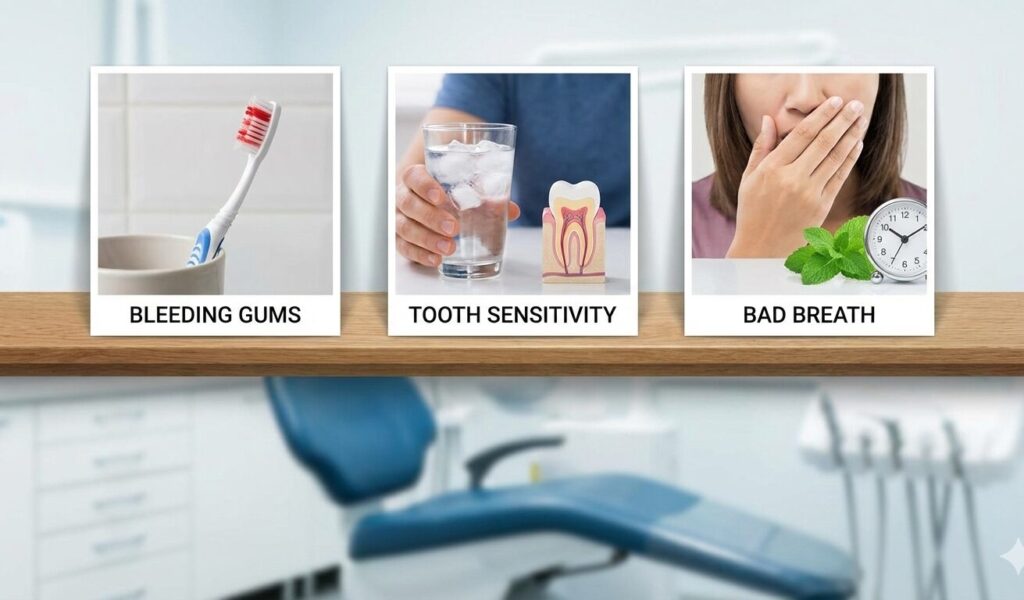
Many people experience bleeding gums while brushing, sudden tooth sensitivity, or persistent bad breath and assume these are minor issues. In reality, these symptoms often signal underlying dental or gum problems that should not be ignored.
For residents of Bangalore, lifestyle habits, stress, diet, and irregular dental check-ups can increase the risk of oral health issues. Understanding these early warning signs can help you seek timely dental care and prevent long-term complications.
Bleeding Gums: What Do They Really Indicate?
Bleeding gums are one of the most common signs of poor gum health. Healthy gums should not bleed, even during brushing or flossing.
Common Causes of Bleeding Gums
-
Plaque and tartar buildup along the gum line
-
Gingivitis (early-stage gum disease)
-
Incorrect brushing technique or hard-bristled toothbrush
-
Vitamin deficiencies
-
Hormonal changes
-
Tobacco use
When Bleeding Gums Need Dental Attention
You should consult a dentist if:
-
Your gums bleed frequently while brushing
-
Gums appear red, swollen, or tender
-
You notice gum recession
-
Bleeding is accompanied by bad breath
Early treatment can reverse gum inflammation and prevent progression to advanced gum disease.
Tooth Sensitivity: Why Do Teeth Become Sensitive?
Tooth sensitivity usually feels like a sharp pain when consuming hot, cold, sweet, or acidic foods and drinks.
Common Causes of Tooth Sensitivity
-
Enamel erosion due to acidic foods or drinks
-
Gum recession exposing tooth roots
-
Tooth decay or cavities
-
Cracked or worn teeth
-
Teeth grinding (bruxism)
When Tooth Sensitivity Is a Warning Sign
You should see a dentist if:
-
Sensitivity lasts more than a few days
-
Pain is intense or worsening
-
One specific tooth hurts consistently
-
Sensitivity is accompanied by gum bleeding or swelling
A dental examination can identify the cause and prevent further damage.
Bad Breath (Halitosis): More Than Just a Hygiene Problem
Occasional bad breath is normal, but persistent bad breath often indicates an underlying dental issue.
Dental Causes of Bad Breath
-
Gum disease
-
Tooth decay
-
Food particles trapped between teeth
-
Dry mouth
-
Oral infections
When Bad Breath Requires Dental Care
Visit a dentist if:
-
Bad breath continues despite brushing and mouthwash
-
You experience a bad taste in your mouth
-
Gums bleed or feel sore
-
There is dryness or discomfort in the mouth
Professional cleaning and treatment of oral infections can effectively eliminate chronic bad breath.
Why These Symptoms Should Not Be Ignored
Bleeding gums, tooth sensitivity, and bad breath often occur together and may indicate:
-
Gum disease progression
-
Tooth infections
-
Poor oral hygiene habits
-
Increased risk of tooth loss
Ignoring early symptoms can lead to painful dental conditions and more complex treatments later.
How a Dentist Can Help
A dentist can diagnose the root cause through:
-
Comprehensive oral examination
-
Gum health assessment
-
Dental X-rays if required
-
Professional scaling and cleaning
-
Customized treatment plan
Early dental intervention helps preserve natural teeth and maintain long-term oral health.
Preventive Tips for Healthy Teeth and Gums
-
Brush twice daily using proper technique
-
Floss regularly to remove plaque between teeth
-
Avoid tobacco products
-
Limit sugary and acidic foods
-
Drink plenty of water
-
Schedule regular dental check-ups
Preventive care plays a vital role in maintaining healthy teeth and gums.
When Should You See a Dentist Immediately?
Book a dental appointment if you experience:
-
Bleeding gums that persist
-
Increasing tooth sensitivity
-
Persistent bad breath
-
Pain, swelling, or loose teeth
Timely dental care can prevent complications and ensure better oral health.
Common Dental Symptoms & When to See a Dentist
| Dental Symptom | Possible Cause | When to Visit a Dentist |
|---|---|---|
| Bleeding gums | Plaque buildup, gum disease | If bleeding is frequent or gums are swollen |
| Tooth sensitivity | Enamel erosion, cavities | If pain persists or worsens |
| Bad breath | Gum disease, decay | If it lasts despite good oral hygiene |
| Gum swelling | Infection or inflammation | Immediately if painful |
| Loose teeth | Advanced gum disease | Urgent dental consultation |
Conclusion: Listen to the Early Warning Signs
Bleeding gums, tooth sensitivity, and bad breath are early indicators of dental problems. Addressing them promptly can prevent serious complications and protect your long-term oral health.
If you are experiencing bleeding gums, tooth sensitivity, or persistent bad breath, schedule a dental check-up at Ivory Dental World, JP Nagar, and take the first step toward healthier teeth and gums.
FAQs: Bleeding Gums, Tooth Sensitivity & Bad Breath
1. Is bleeding while brushing normal?
No. Bleeding gums usually indicate inflammation or gum disease and require dental evaluation.
2. Can sensitive teeth heal on their own?
Mild sensitivity may improve, but persistent sensitivity needs professional dental care.
3. Does mouthwash permanently cure bad breath?
Mouthwash provides temporary relief. Treating the underlying dental cause is essential.
4. How often should I visit a dentist?
A dental check-up every six months is generally recommended.
5. Can gum disease be reversed?
Early-stage gum disease can be reversed with proper dental care and hygiene.